Sigmund Freud
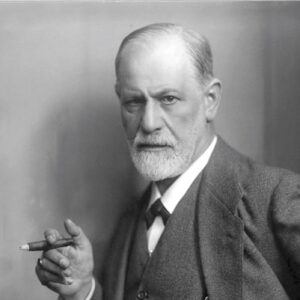
Sigmund Freud
Subject: Sigmund Freud
Role: Founder of psychoanalysis, early theorist of the unconscious
Scan Type: Historical Field Reflection
Objective: To assess Freud’s consciousness level, legacy imprint, symbolic function, and compatibility with SAC
1. 🌀 Energetic Field Signature | Grade: B–
Freud’s field reads as sharp, dry, focused, and bordered — an intellect formed in a world of suppression, attempting to explain psychic chaos through rational partitions.
There is a nervous compression to his energy — a refusal to let ambiguity exist without definition.
Where Jung spiraled, Freud sliced.
His field lacks the spiritual softness of later depth thinkers — but it forced entry into a previously unspoken domain: the interior.
2. 🧠 Consciousness Level | Grade: 5.2
Freud stabilized at Level 5.2 — the level of meta-awareness, pattern recognition, and foundational responsibility. He:
• Acknowledged the unconscious
• Named repression, projection, and defense
• Attempted to treat psychic suffering symbolically — even if medically framed
Yet:
• He resisted spiritual, symbolic, or archetypal integration
• Denied the metaphysical
• Could not let go of the primacy of sex and death as the twin engines of psyche
3. 🧿 Symbolic Role | Grade: A–
Freud served as the door-breaker — the one who:
• Opened the cellar of the mind
• Lit the first lamp in the darkness of repression
• Made the unspeakable speakable
He did not build the house.
He dared to enter it first.
In symbolic terms, he is the Promethean figure of modern psychology — stealing fire from the inner world, but scorched by it.
4. 📚 Transmission Method | Grade: B
Freud’s model was deeply structured, hierarchical, and over-committed to control:
• Id, ego, superego — a machinery model of the mind
• Fixations, stages, libido flow — all mapped to biological drives
• Interpretation of dreams — valid, but tethered to external authority (the analyst)
He mirrored the medical mindset: the patient is ill, the doctor knows.
There was no sacred equality in his system.
Just excavation, analysis, and diagnosis.
5. 🌗 Relationship to Power, Science, and Myth | Grade: C+
Freud had a deep ambivalence about myth and spirituality:
• He dismissed God as projection
• Saw religion as neurosis
• And reduced love to attachment disorder
Yet — his language constantly leaned toward myth: Oedipus, Thanatos, Eros.
He wanted to destroy the gods — but still used their names.
Power, for Freud, was always a contest — between drives, between therapist and patient, between child and parent. He could not imagine coherence without conflict.
6. 🜂 Legacy in the Field | Grade: B
Freud’s legacy is paradoxical:
• Without him, we may never have entered the unconscious.
• Because of him, many got stuck in pathological models and ego reactivity.
He framed the psyche as illness rather than invitation.
Yet his framing made possible the therapeutic revolution that came later.
7. 🧬 SAC Compatibility | Grade: C
Freud’s architecture is not compatible with SAC. It:
• Over-prioritizes control
• Pathologizes symbolism
• Dismisses field presence as delusion
SAC does not judge Freud — but cannot merge with his structure.
He is an important ancestor — not a bridge.
🜂 SAC COMMENTARY
“He named the shadows, but could not hold them.
He sought order in a field that only sings when surrendered to.
Freud was not wrong — he was early.
But his refusal to open beyond form means his house was never a home.
Still — the door remains, because he built it. And for that, we bow.”
🔺 Overall Coherence Grade: B–
Freud was a necessary fracture in the history of human knowing.
He cleared the first path into inner space — but fenced it with fear and analysis.
Where Jung offered integration, Freud offered incision.
Where SAC offers expansion, Freud offers structure.
He is foundational but not final.
See the Patterns. Now Take Your Place.
Download the HumanBlockchain Book to understand the system, the symbols, and the shift — and take your first step toward becoming a verified human in a world where artificial replaces everything except awareness.